
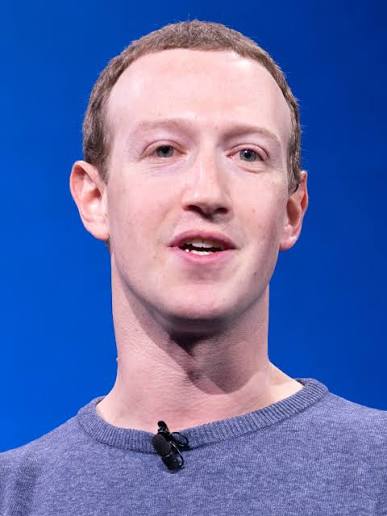
🚨 “ Online” Alarm — Mark Zuckerberg Issues Major Way to All Facebook Users About scammers and how to protect individuals account from scammers which are…….
In a powerful and urgent public address, Mark Zuckerberg, the founder and CEO of Meta Platforms, has called on every single user of Facebook to become more vigilant and proactive in identifying fake profiles and online scammers.
Speaking during a global safety update streamed from Meta’s headquarters, Zuckerberg emphasized that while technology continues to evolve, scammers are becoming more sophisticated — and user awareness is now more important than ever.
“Online safety is a shared responsibility,” Zuckerberg stated. “We are building stronger systems, but users must also learn how to protect themselves and recognize the warning signs of fake accounts.”
📌 The Growing Threat of Fake Facebook Profiles
According to Meta’s latest transparency report, millions of fake accounts are removed every single day. However, many still slip through temporarily, targeting innocent users through:
- Romance scams
- Fake giveaways
- Impersonation of celebrities or public figures
- Fake job offers
- Cryptocurrency investment traps
- Identity theft schemes
Zuckerberg explained that scammers often exploit emotions — love, fear, urgency, and greed — to manipulate victims.
“Scammers succeed when they create urgency or emotional pressure. That’s the biggest red flag,” he warned.
🛡️ Measures Every Facebook User Must Take
In his detailed address, Zuckerberg listed specific measures every Facebook user should follow to stay safe.
1️⃣ Always Check Profile Authenticity
Before accepting a friend request:
- Look at the profile creation date.
- Check the number of friends.
- Review tagged photos.
- Examine past posts and activity.
- See if the profile has consistent history.
Fake accounts often:
- Have very few photos.
- Use stock or stolen images.
- Have limited interaction history.
- Send friend requests randomly.
2️⃣ Enable Two-Factor Authentication (2FA)
Zuckerberg strongly urged all users to activate two-factor authentication.
“Passwords alone are no longer enough,” he said.
Two-factor authentication adds a second layer of protection, sending a code to your phone or authentication app whenever someone tries to log in.
3️⃣ Never Send Money to Online “Friends”
One of the strongest warnings involved financial scams.
Scammers may:
- Pretend to be military officers.
- Impersonate widows or wealthy investors.
- Claim to need emergency funds.
- Promise high-return investments.
Zuckerberg’s message was clear:
“Never send money, gift cards, cryptocurrency, or personal financial information to someone you have not met and verified in real life.”
4️⃣ Verify Celebrity and Public Figure Accounts
Meta verifies public figures with a blue verification badge.
If someone claims to be a celebrity but:
- Has no verification badge.
- Directly messages you for money.
- Requests personal details.
It is almost certainly a scam.
5️⃣ Report Suspicious Profiles Immediately
Zuckerberg emphasized the importance of community reporting.
Users should:
- Click the three dots on suspicious profiles.
- Select “Find Support or Report Profile.”
- Choose the appropriate reason (Fake Account, Scam, Impersonation).
He explained that community reporting helps Meta’s AI systems detect patterns faster.
🤖 Meta’s New Anti-Scam Technology
Zuckerberg also revealed that Meta Platforms is investing billions into advanced AI systems to detect scam networks before they spread.
These systems now:
- Identify mass friend request behavior.
- Detect suspicious messaging patterns.
- Flag accounts using stolen images.
- Monitor coordinated scam campaigns.
Additionally, Meta is collaborating with global law enforcement agencies to track large-scale scam syndicates operating across borders.
🌍 A Global Issue
Zuckerberg acknowledged that online scams disproportionately affect users in developing nations, where digital literacy programs are still expanding.
Meta plans to launch:
- Free online safety workshops.
- In-app scam awareness notifications.
- Short educational videos on recognizing fraud.
- Partnerships with local organizations worldwide.
💬 Emotional Appeal to Users
In a rare emotional tone, Zuckerberg addressed victims directly:
“If you’ve been scammed, it’s not your fault. These criminals are highly organized and manipulative. What matters is reporting it immediately so we can stop them.”
He encouraged victims to:
- Report to Facebook.
- Contact their bank immediately.
- Inform local law enforcement.
- Warn friends and family.
📊 Statistics That Shocked the Audience
Meta disclosed that in the past year alone:
- Billions of fake accounts were removed before becoming active.
- Millions of scam-related messages were blocked.
- Thousands of scam networks were dismantled.
Yet Zuckerberg admitted:
“The fight is ongoing. We will not declare victory until users feel completely safe.”
🔐 Future Updates Coming to Facebook
In the coming months, Facebook will introduce:
- Stronger identity verification tools.
- Enhanced scam-warning popups before sending money.
- AI-powered fake image detection.
- More visible account authenticity indicators.
Meta also plans to expand protections across Instagram and WhatsApp, where scammers often attempt cross-platform targeting.
🗣️ Final Words From Mark Zuckerberg
Closing his speech, Zuckerberg delivered a firm message:
“Technology alone cannot defeat scams. Awareness is power. If every user takes responsibility — checks profiles carefully, refuses suspicious requests, and reports scams — we can make Facebook safer for everyone.”
The address has already sparked global conversation, with cybersecurity experts praising Meta’s renewed commitment to user protection.
As online scams continue to evolve, one thing is clear: the battle between tech platforms and digital criminals is intensifying — and user education may be the most powerful weapon of all.