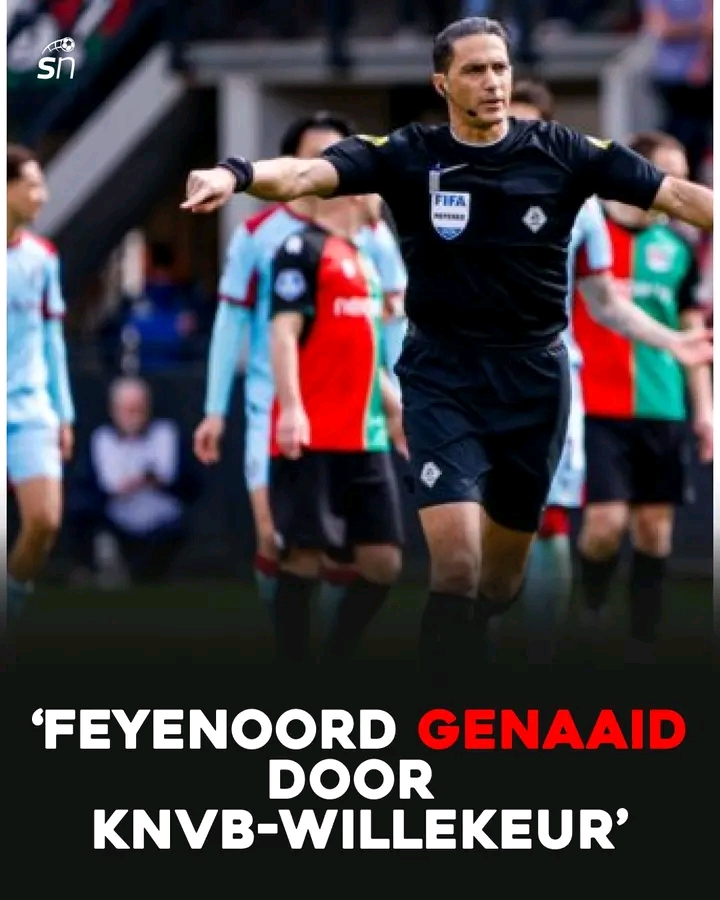
Dutch football is once again at the center of controversy following a heated debate surrounding and alleged inconsistent refereeing decisions. A recent post by has sparked strong reactions among fans and analysts, with the bold claim: “Feyenoord genaaid door KNVB-willekeur”—translated as “Feyenoord stitched up by KNVB arbitrariness.”
The statement suggests that Feyenoord have been unfairly treated due to inconsistent or questionable decisions by officials under the authority of the . The issue appears to center around refereeing standards and the application of rules, with many pointing to a lack of consistency across matches.
The image accompanying the post shows referee in action, signaling firmly during a match involving Feyenoord players. His presence in the discussion highlights the growing scrutiny on referees and their decision-making in high-stakes games.
The phrase “Bij de een wel, bij de ander niet…” (For one it’s given, for another it’s not) further emphasizes the frustration. It reflects a widespread sentiment among fans that similar incidents are being judged differently depending on the match or team involved. This perceived inconsistency has fueled debates about fairness and transparency in Dutch football.
Feyenoord supporters have been particularly vocal, expressing anger and disappointment on social media. Many believe their team has been disadvantaged by key decisions that could have influenced match outcomes. In a competitive league where every point matters, such moments can have significant consequences for title races and European qualification.
This is not the first time the KNVB has faced criticism over refereeing standards. In recent seasons, discussions around VAR usage, penalty decisions, and red card incidents have frequently dominated headlines. While technology was introduced to reduce errors, it has also added another layer of controversy when decisions remain subjective.
Analysts argue that the core issue lies not only in individual mistakes but also in the lack of clear and consistent guidelines. When similar situations produce different outcomes, it undermines trust in the system and raises questions about accountability.
On the other hand, some voices within the football community urge caution. Refereeing is inherently difficult, with officials required to make split-second decisions under immense pressure. They argue that while mistakes are inevitable, accusations of bias or unfair treatment should be made carefully.
The KNVB has yet to issue an official response to the latest wave of criticism, but pressure is mounting for greater clarity and consistency. Calls for improved communication, better use of VAR, and more transparency in decision-making are growing louder.
For Feyenoord, the focus remains on their performances on the pitch, but the controversy adds an extra layer of tension to their campaign. Players and coaching staff will need to maintain concentration despite the noise surrounding officiating decisions.
As the debate continues, this situation highlights a broader issue within football—not just in the Netherlands, but globally. The balance between human judgment and technological assistance remains delicate, and achieving consistency is an ongoing challenge.
Ultimately, the controversy serves as a reminder of how crucial fair officiating is to the integrity of the game. Whether or not Feyenoord were truly “wronged,” the discussion has once again put refereeing standards under the spotlight.