Liverpool Told to Trust Ready-Made Salah Replacement at Anfield Over Expensive New Signing
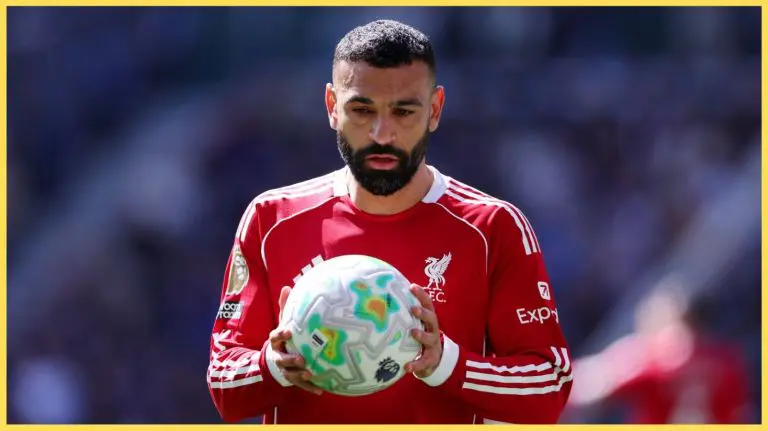
Questions surrounding the long-term future of Liverpool FC superstar Mohamed Salah continue to dominate discussions ahead of another crucial summer transfer window, but a growing number of analysts and former players now believe the club may already possess the ideal successor within its own ranks rather than spending a massive fee on an external replacement.
For months, speculation has linked Liverpool with several elite attacking players across Europe, with reports suggesting the club could be prepared to invest heavily in a marquee forward capable of eventually replacing Salah’s goals, creativity, and leadership. Yet despite the attraction of signing a globally recognized star, many around Anfield believe the smarter solution could already be developing inside the current squad.
Salah remains one of the most influential players in world football. Since arriving from AS Roma in 2017, the Egyptian international has transformed Liverpool into a relentless attacking force. His goals helped deliver the Premier League title, the UEFA Champions League trophy, domestic cups, and numerous unforgettable European nights at Anfield.
However, with Salah now entering the latter stages of his career, conversations about succession planning have intensified. Liverpool’s recruitment department, led by senior club officials and heavily influenced by modern data analysis, has reportedly monitored several high-profile wingers valued at enormous transfer fees. Some reports in England have even claimed the Reds could spend well over $100 million to secure a proven elite attacker.
Despite that possibility, several football voices insist Liverpool should resist the temptation to overspend and instead place their faith in emerging talent already adapting to life at the club. The belief is that continuity, tactical familiarity, and patience may provide greater long-term value than another blockbuster transfer.
One name increasingly mentioned in these conversations is young winger Ben Doak. The Scottish talent has earned praise for his fearless style, direct dribbling, and explosive pace. Although still developing, many supporters view him as one of the most naturally exciting wide players to emerge from Liverpool’s academy system in recent years.
Others believe the club should continue developing players such as Harvey Elliott, who has gradually matured into a versatile attacking option capable of influencing games from multiple positions. Elliott’s technical quality, intelligence between the lines, and understanding of Liverpool’s pressing structure have impressed coaches and fans alike.
Former Liverpool players and pundits have argued that replacing Salah directly is nearly impossible. Instead of attempting to buy a carbon copy, they believe Liverpool should evolve collectively as a team. The idea would involve redistributing attacking responsibilities across multiple players rather than relying on one dominant scorer.
That philosophy appears closely aligned with the tactical approach favored by head coach Arne Slot. Since arriving at Liverpool, Slot has emphasized fluid movement, positional rotation, and collective attacking structures instead of depending solely on individual brilliance. Under his system, wide players are expected to contribute creatively, press aggressively, and interchange dynamically across the front line.
Club insiders reportedly feel Liverpool’s current attacking depth already contains enough quality to transition into a new era gradually. The emergence of younger players combined with experienced figures such as Luis Díaz, Diogo Jota, and Darwin Núñez could allow the team to maintain elite attacking standards without placing enormous financial pressure on a single replacement signing.
Financial strategy is also becoming an increasingly important factor. Liverpool’s ownership group has traditionally avoided reckless spending unless a transfer is viewed as transformative. Although the club is capable of major investments, decision-makers are believed to prefer sustainable squad building over emotionally driven transfer battles.
Recent football history offers several examples of clubs spending huge amounts attempting to replace legendary players only to struggle under the weight of expectations. Liverpool themselves experienced difficult transitions following the departures of icons in previous eras. As a result, many supporters believe the club should avoid creating unnecessary pressure by labeling any newcomer as “the next Salah.”
Instead, fans are beginning to embrace the possibility that the next great Liverpool attacker may already wear the famous red shirt. Anfield has long celebrated the development of homegrown and internally cultivated talent, from past academy graduates to modern success stories nurtured patiently within the club’s structure.
There is also confidence that Liverpool’s recruitment team can still strengthen the squad intelligently without prioritizing a direct Salah heir. Midfield reinforcements, defensive depth, and long-term squad balance may ultimately prove more important than one glamorous attacking signing.
Meanwhile, Salah himself continues to perform at an elite level despite ongoing speculation about his future. His professionalism, physical conditioning, and relentless consistency have allowed him to remain among the most productive forwards in Europe. Coaches inside Liverpool reportedly believe the Egyptian still has several high-quality seasons remaining at the highest level.
That timeline could become crucial for the development of younger players waiting for greater responsibility. Rather than forcing an immediate transition, Liverpool may choose a gradual succession plan in which emerging attackers learn directly from Salah before eventually stepping into larger roles.
Supporters remain divided over the issue. Some believe Liverpool should seize the opportunity to sign another world-class superstar while financial resources are available. Others feel the club’s greatest successes have historically come from trusting intelligent coaching and long-term development rather than simply winning transfer races.
What appears certain is that Liverpool face one of the most important strategic decisions of the coming years. Replacing a player of Salah’s stature is not merely about statistics; it involves leadership, mentality, commercial influence, and emotional connection with supporters.
Yet there is growing belief around Anfield that the answer may not require a record-breaking transfer at all. Instead, Liverpool could already possess the foundations of their post-Salah era — one built on patience, tactical evolution, and faith in the next generation ready to rise under the lights of Anfield.