Paul Wanner may have only needed 45 minutes to leave his mark, but the PSV midfielder made sure those minutes counted.
The 20-year-old came off the bench at half-time as Austria faced Israel in their UEFA Nations League opener on Thursday, and when the match entered its final stages, Wanner produced the moment that helped turn a tense contest into a 3-1 Austrian victory.
With the score locked at 1-1 and Israel defending with ten men, Wanner found space on the left and delivered the decisive cross for Phillipp Mwene, who finished in the 90th minute to restore Austria’s lead.
Three minutes later, Saša Kalajdžić added another goal to complete the comeback.
For PSV supporters watching the international break, however, the headline was not simply Austria’s victory.
It was Wanner.
The young midfielder was brought into the game at a difficult moment, but instead of disappearing into the background, he became involved in the decisive passage of play.
PSV themselves highlighted his contribution after the match, noting that Wanner came on against Israel and supplied the assist as Austria turned a draw into a 3-1 win.
And that is exactly why this performance could attract plenty of attention around Eindhoven.
Wanner is no longer simply a young player with potential.
He is increasingly becoming a player capable of producing moments that matter.
Wanner’s 45-minute cameo changed the story
Austria did not have everything their own way against Israel.
The hosts had taken the lead before half-time when Romano Schmid converted a penalty in the 43rd minute. But Israel responded shortly after the break, with Saied Abu Farchi heading home in the 55th minute.
Then came one of the strangest moments of the match.
Abu Farchi was shown a second yellow card almost immediately after his equaliser, leaving Israel with ten men for the remainder of the contest. The circumstances surrounding the dismissal attracted significant attention because of the way the forward celebrated his goal with the corner flag. Reuters reported that the celebration was interpreted as a gun gesture.
Austria suddenly had a numerical advantage.
But having an extra player does not automatically mean finding the winning goal.
Israel remained in the game.
Austria needed somebody to produce the final pass.
That was where Wanner became important.
The PSV midfielder had entered at half-time, replacing Marco Grüll. According to the match records, his decisive contribution came in the 90th minute when he supplied the assist for Mwene’s goal.
Wanner’s cross found Mwene inside the area, and the former PSV player finished to put Austria 2-1 ahead.
The timing could hardly have been more dramatic.
For almost the entire second half, Austria had been trying to break through.
When the opportunity finally came, Wanner was involved.
And that is the kind of contribution that gets remembered.
PSV were quick to highlight their young midfielder
The timing of the performance was particularly interesting because PSV are following Wanner’s development closely.
The Eindhoven club published an international-break update on September 25 specifically mentioning Wanner’s performance against Israel.
PSV reported that Wanner came on as a substitute and helped Austria turn the match from a draw into a 3-1 victory, with the midfielder providing an assist.
That recognition from his club matters because Wanner’s role at PSV has been growing.
He is not at Eindhoven simply to fill out the squad.
PSV signed him from Bayern Munich in August 2025 on a five-year contract, with the midfielder taking the No. 10 shirt. The club described him at the time as a creative, dynamic and attacking midfielder with significant potential.
Since then, his development has taken another important turn.
Wanner has established himself as an Austria international after previously representing Germany at youth level.
That international decision added another layer to his career.
And now, performances such as the one against Israel are beginning to show why Austria wanted him involved in their senior setup.
From Bayern’s youngest debutant to PSV’s No. 10
Wanner’s story did not begin at PSV.
He came through the Bayern Munich system and made history at the German club.
According to PSV’s official player profile, Wanner became Bayern’s youngest-ever official debutant at the age of 16. He subsequently gained experience through loan spells at SV Elversberg and 1. FC Heidenheim before eventually moving to Eindhoven.
That pathway is important.
Young players can make an early breakthrough at a major club without immediately becoming established first-team stars.
Wanner’s development instead involved gaining senior experience elsewhere.
He played in Germany’s second tier with Elversberg.
He then experienced Bundesliga football with Heidenheim.
And eventually PSV decided to make the move permanent.
The Dutch club’s decision demonstrated that it viewed Wanner as more than a short-term project.
He signed a contract running until the middle of 2030.
That long-term commitment gives PSV an important stake in his development.
It also means every improvement in Wanner’s game becomes increasingly relevant to the club.
The Austria decision added another dimension
There is another fascinating part of Wanner’s development.
He was born in Germany and represented Germany at youth level, including at Under-21 level.
But he ultimately chose to represent Austria at senior international level.
PSV confirmed earlier in 2026 that Wanner had chosen Austria and subsequently made his senior debut.
That decision has now produced another important chapter.
Wanner is beginning to accumulate senior international experience while simultaneously establishing himself at PSV.
The combination could be significant for his development.
International football exposes young players to different tactical systems, different teammates and different levels of pressure.
A midfielder who can adapt to those environments can gain valuable experience that is difficult to reproduce in training.
For Wanner, the Austria experience is therefore about more than simply collecting appearances.
It is another stage in his development as a senior player.
A late assist that PSV fans will remember
The actual assist against Israel was simple in its description but important in its timing.
Austria had been pushing for a second goal.
Wanner received the ball and delivered the cross.
Mwene finished.
90th minute.
2-1.
The goal completely changed the atmosphere.
Instead of facing the possibility of dropping points despite having a numerical advantage for much of the second half, Austria suddenly had the lead.
Then Kalajdžić struck again in stoppage time.
According to match data, Austria’s third goal arrived in the 90th+3rd minute, with Christoph Lang providing the assist.
The final score was therefore 3-1.
But Wanner’s contribution came at exactly the moment Austria needed creativity.
And that is perhaps the most interesting aspect of the performance.
He did not need to dominate the entire match.
He needed one moment.
He produced it.
Wanner’s introduction came at half-time
The match records show that Wanner replaced Grüll at the interval.
That meant he entered with the score 1-0 to Austria.
Within ten minutes, however, the match had changed.
Israel equalised.
Then Abu Farchi was dismissed.
Austria had to find a way through a more defensive Israel side.
Wanner therefore entered the game at a stage when Austria needed attacking solutions.
That context makes the assist even more significant.
It was not a meaningless late contribution in a match that had already been decided.
It was the pass that helped break the deadlock.
Sporting Life’s match commentary records Wanner as the provider for Mwene’s 90th-minute goal, while the Guardian’s match report also lists Wanner in Austria’s substitutes and confirms Mwene’s late winner.
The numbers show how competitive the match was
The final score might suggest a comfortable Austrian victory.
The match itself was not that straightforward.
The Guardian’s match data recorded possession at 50 percent for both teams. Austria registered eight shots on target compared with one for Israel.
That tells an important part of the story.
Austria had more attacking threat, but Israel remained capable of making the game uncomfortable.
Austria’s inability to kill off the match earlier meant the contest remained open deep into the second half.
That was why the late goals mattered.
And Wanner’s contribution arrived when the game was still balanced.
The red card changed the match — but Austria still had to finish it
One of the biggest talking points from the match was Abu Farchi’s dismissal.
The Israeli forward had just scored to make it 1-1.
But moments later, he received another yellow card following his celebration and was sent off.
BBC’s match report confirmed that the 20-year-old was dismissed after lifting the corner flag during his celebration.
The dismissal left Israel with ten players.
From that point, Austria had a numerical advantage.
Yet the winning goal did not arrive immediately.
Austria had to keep searching.
Israel goalkeeper Daniel Peretz also played a significant role in keeping the visitors in contention.
The late breakthrough eventually came through Mwene, with Wanner providing the delivery.
That sequence gives the match its most interesting PSV connection.
The assist came from Wanner.
The goal came from former PSV player Mwene.
And Austria completed the turnaround.
A special connection between Wanner and Mwene
There was something particularly fitting about the winning goal.
Wanner currently plays for PSV.
Mwene previously played for PSV.
And it was Wanner who supplied the pass for Mwene to score Austria’s second goal.
PSV themselves pointed out the connection in their international-break report, describing Mwene as a former PSV player after mentioning Wanner’s assist.
For supporters of the Eindhoven club, that made the moment even more interesting.
Wanner is still building his story at PSV.
Mwene already has his history there.
And together they combined for Austria’s crucial goal.
Wanner is becoming increasingly important for PSV
There is also a club-level reason why this performance deserves attention.
Wanner has been involved regularly for PSV this season.
Opta Analyst’s current international profile lists him as having appeared in all seven of PSV’s Eredivisie matches at the time of the September international break, with 401 minutes played. It also lists two Eredivisie assists.
That is significant for a 20-year-old midfielder.
He is not simply making occasional substitute appearances.
He is receiving consistent opportunities.
And his ability to contribute assists is particularly relevant given his attacking role.
PSV’s official profile lists him as a midfielder who can also play as a winger, while noting that he feels most comfortable as an attacking midfielder.
That versatility gives his coaches different options.
He can operate centrally.
He can move wider.
He can attack space.
And he can provide the final pass.
Against Israel, it was the final-pass ability that mattered.
The next question is what happens when Wanner returns to Eindhoven
The international break will eventually end.
Then Wanner returns to PSV.
And that is where the latest performance becomes particularly relevant.
International football can create momentum for players.
A good performance with a national team can increase confidence.
A decisive assist can also reinforce a player’s belief that he belongs at that level.
For PSV, the challenge is to turn that confidence into consistent club performances.
The club already knows what Wanner can offer.
He arrived with a reputation as a creative midfielder.
Now he is adding senior international experience to that profile.
The next step is consistency.
Can he continue producing chances and assists?
Can he become more decisive around the penalty area?
Can he turn promising performances into regular match-winning contributions?
Those questions will follow him back to Eindhoven.
PSV have already seen Wanner produce decisive moments
This is not the first time Wanner has demonstrated his ability to make an important contribution for PSV.
Earlier in 2026, PSV highlighted one of his goals after a victory over Fortuna Sittard.
The club reported that Wanner opened the scoring in the eighth minute, producing a goal almost identical to his previous strike against Excelsior Rotterdam. PSV also named him Star of the Match for that performance.
That illustrates another part of his game.
Wanner is capable of contributing goals as well as assists.
That is important for an attacking midfielder.
If defenders focus too heavily on his passing, he can attack the box.
If they close his shooting lanes, he can create for teammates.
The more dimensions he adds to his game, the more difficult he becomes to defend.
PSV’s faith in Wanner has been clear from the beginning
When PSV signed Wanner in 2025, the club made a significant commitment.
He signed for five years.
He received the No. 10 shirt.
And PSV described him as a creative, dynamic and attacking player who could provide immediate value while still possessing considerable potential.
The long contract is important because it suggests PSV were thinking beyond a single season.
They were investing in development.
At 20, Wanner is still young enough to have substantial room for improvement.
But he also already has senior experience in Germany, the Netherlands and now international football.
That combination is valuable.
He is no longer starting from zero.
He is building on several years of professional football.
Austria now has another reason to trust him
Wanner’s choice of Austria created a new opportunity.
The national team can now develop him within its own system.
And the recent match showed one of the things he can offer.
Austria were struggling to find a breakthrough late in the match.
Wanner provided the decisive delivery.
That does not mean one assist suddenly makes him a guaranteed starter.
But it does give him another strong piece of evidence in his international development.
UEFA’s player profile lists Wanner as an Austria midfielder and records his involvement in the Nations League.
His next opportunity is already close.
UEFA’s fixture list shows Austria are scheduled to face Kosovo on September 27 in their next Nations League match.
That means Wanner will not have to wait long for another chance to make an impression.
Austria’s Nations League group is already competitive
Austria’s 3-1 win over Israel put them at the top of the early Group B3 table after the opening round, according to the Guardian’s match information.
Kosovo also began with a victory, beating the Republic of Ireland 1-0.
So Austria’s next match against Kosovo could be another important test.
Wanner may again be asked to provide creativity from midfield.
Whether he starts or comes off the bench will depend on the coaching decision, but the Israel performance gives him a positive moment to build on.
The schedule is demanding.
Austria are due to play Kosovo on September 27, the Republic of Ireland on October 1, Kosovo again on October 4, the Republic of Ireland on November 14 and Israel on November 17.
There will therefore be plenty of opportunities for Wanner to add to his international experience.
Why the PSV post is attracting attention
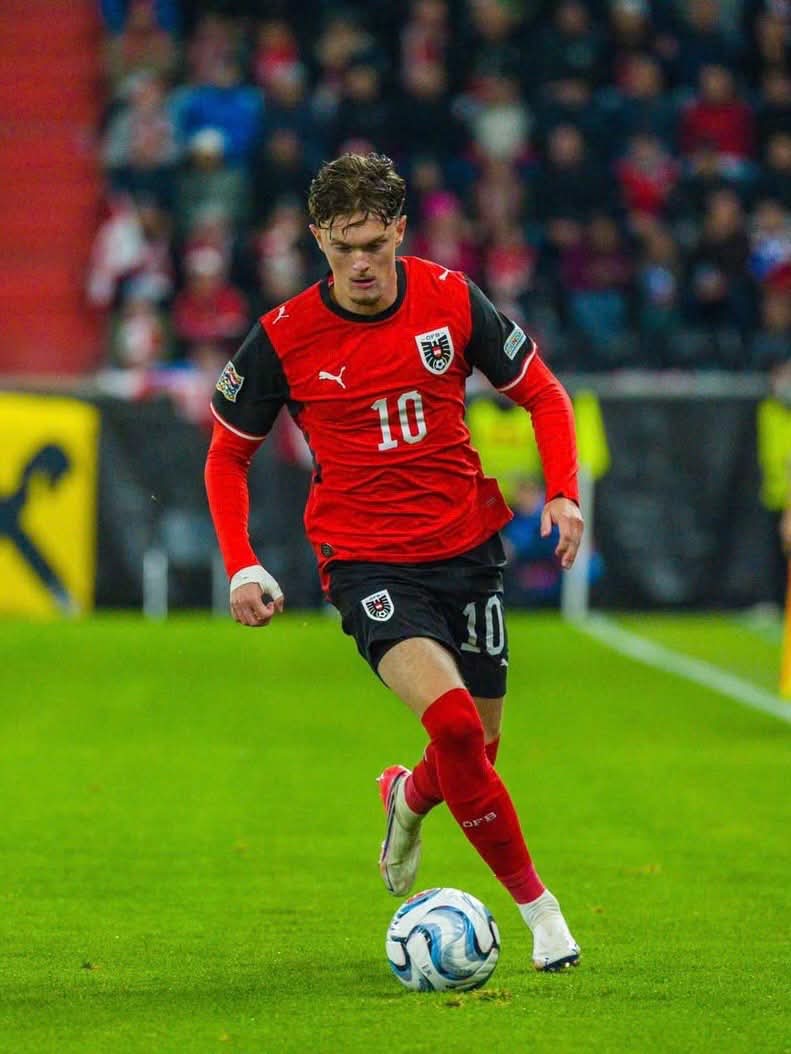
The image shared by PSV shows Wanner in Austria’s red shirt during the match.
The club’s accompanying message focused on his late contribution.
That makes sense from PSV’s perspective.
A young player representing his country and providing a decisive assist is valuable publicity for both the player and the club.
It also gives supporters something to discuss during the international break.
PSV fans are naturally interested in how their players perform away from Eindhoven.
Wanner’s performance gave them a particularly easy reason to pay attention.
He did not merely appear.
He directly contributed to a goal.
And he did so in the final minute of normal time.
There is another interesting detail: Wanner’s development is happening quickly
Wanner was born on December 23, 2005.
He is now 20.
At an age when many players are still trying to establish themselves in senior football, he has already played for Bayern Munich, experienced loan spells, moved permanently to PSV and become an Austria international.
That does not guarantee where his career will eventually go.
Football development rarely follows a straight line.
But the trajectory is notable.
Every new level requires adjustment.
German football gave him one environment.
The Netherlands gave him another.
Austria has now introduced international football.
His ability to perform across those environments will be an important part of his continued development.
The assist itself tells us something about his style
Wanner’s role at PSV is built around creativity.
That was evident in the winning goal against Israel.
Rather than simply carrying the ball forward himself, he created the opportunity for another player.
That is a central responsibility for an attacking midfielder.
The best attacking midfielders are not necessarily the players who touch the ball most.
Sometimes their biggest contribution is recognizing the right moment to release it.
Wanner did exactly that.
His cross arrived at a point when Austria needed someone to make the difference.
Mwene finished.
The assist went to Wanner.
The scoreboard changed.
PSV will hope this becomes a pattern
For PSV, one international assist is not the final objective.
The club will want Wanner to return to Eindhoven and continue producing.
The official PSV statistics currently list him with two assists in nine appearances and 523 minutes across the competitions represented on his player page.
That provides an indication of how much involvement he is already receiving.
The more minutes he gets, the more opportunities he has to influence games.
The next stage is converting those opportunities into consistent output.
That could mean more assists.
More goals.
More chances created.
And more performances where he becomes one of the players supporters remember after the final whistle.
The timing could be important for PSV
The international break has arrived during a busy period for PSV.
The club recently suffered a 3-2 defeat away to FC Twente, a match in which Wanner also had a notable chance shortly after half-time, according to PSV’s own post-match report.
That means Wanner’s international performance comes at an interesting moment.
He has returned from club football into international football and immediately produced a decisive contribution.
When he comes back to Eindhoven, PSV will be looking for a response in their next matches.
For Wanner, that creates an opportunity.
He can take the confidence from Austria into the club environment.
Of course, one international assist does not automatically determine what happens in his next PSV appearance.
But it provides a positive platform.
A player who is still learning
One of the most important things to remember about Wanner is his age.
At 20, he is still developing.
He does not need to have every aspect of his game perfected already.
His career at PSV is about growth.
His international career with Austria is also about growth.
The challenge is to combine the two.
Every match provides another lesson.
Every start provides another experience.
Every substitute appearance can teach him how to influence a game from the bench.
And every assist provides evidence that his creativity can make a difference at senior level.
The Israel match provided all of that in one night.
The bigger picture for PSV
PSV’s decision to acquire Wanner from Bayern was partly about the present and partly about the future.
The club’s official announcement made clear that Wanner was expected to provide immediate value while continuing to develop.
That is exactly the type of player profile modern clubs look for.
A young player who can contribute now but still has room to grow gives a club multiple possibilities.
If he develops into a regular high-level performer, PSV benefit on the pitch.
If his value increases, the club also has a valuable asset under a long-term contract.
But for now, the sporting priority is simple.
Help him become the best midfielder he can be.
And international performances like the one against Israel can be part of that process.
Wanner’s international story is only beginning
His decision to represent Austria has opened a new chapter.
Earlier this year, PSV announced that he had chosen Austria after previously representing Germany at youth level.
He subsequently made his senior debut.
Now he is contributing assists in competitive Nations League football.
That is a significant progression in a relatively short period.
The next challenge is maintaining that progress.
Austria have a busy Nations League schedule ahead.
PSV have their own domestic commitments.
Wanner will have to manage both.
That will test his physical preparation, tactical understanding and consistency.
But it also gives him opportunities to develop at a rapid pace.
The late assist was more than just a statistic
When people look back at Austria’s 3-1 victory, the official record will show the goals.
Romano Schmid scored from the penalty spot.
Phillipp Mwene scored in the 90th minute.
Saša Kalajdžić scored in stoppage time.
Israel’s Abu Farchi scored the equaliser.
And Paul Wanner registered an assist.
But statistics sometimes fail to explain the emotional rhythm of a match.
Austria needed the second goal.
The clock was approaching 90 minutes.
Israel had already lost a player to a second yellow card.
The pressure was building.
Then Wanner delivered.
That is the kind of moment young players remember.
It tells them that they can influence matches at international level.
PSV supporters have another reason to watch Austria
The next Austria match is against Kosovo.
And after Wanner’s contribution against Israel, there will naturally be more attention on the PSV midfielder.
The match is scheduled for September 27.
Whether he starts or comes on later will be decided by Austria’s coaching staff.
But his latest performance has put his name into the conversation.
He has demonstrated that he can make a difference even when introduced after half-time.
That versatility can be useful to a national team.
It can also be useful to PSV.
A player who can change a match from the bench gives a coach another tactical option.
The competition for places will remain strong
Austria have several attacking and midfield options.
That means Wanner cannot assume that one assist guarantees a starting position.
The national team environment is competitive.
Players have to continue proving themselves.
That is normal at international level.
For Wanner, the best response is to keep producing.
The more consistently he contributes for PSV, the stronger his case becomes for Austria.
And the more he contributes for Austria, the more confidence he can take back to PSV.
It can become a positive cycle.
From Bayern’s academy to the international stage
The path Wanner has taken is one of the most interesting parts of his story.
He was once Bayern’s youngest-ever official debutant.
He then moved through loan experiences.
He eventually joined PSV permanently.
And now he is playing senior international football for Austria.
That journey has happened quickly.
PSV’s official profile notes his previous spells at Elversberg and Heidenheim before his move to Eindhoven.
Those experiences helped him learn the demands of professional football.
Now he is applying those lessons on a bigger stage.
Why the next few months matter
The 2026/27 season could become an important development period for Wanner.
He has a long-term PSV contract.
He is playing regular club football.
He is involved with Austria.
And he is already producing assists.
That gives him a platform.
But the next step is consistency.
A few spectacular moments can attract attention.
Consistent performances build careers.
Wanner will be looking to combine both.
The PSV No. 10 has a chance to become a bigger figure
The No. 10 shirt carries obvious expectations at a club such as PSV.
It is traditionally associated with creativity, attacking responsibility and technical quality.
Wanner has already shown flashes of those qualities.
His assist against Israel was another example.
But the long-term question is whether he can become a player who regularly determines matches.
That takes time.
It takes physical development.
It takes tactical maturity.
It takes experience.
And it takes the ability to perform even when the game is not going well.
At 20, Wanner still has time to develop those qualities.
One assist, but an important message
It would be too early to treat the Israel match as a defining moment in Wanner’s career.
But it would also be wrong to ignore it.
He entered at half-time.
Austria needed a breakthrough.
Israel had equalised.
The match was heading into its final stages.
Wanner delivered the assist for the 90th-minute winner.
Austria won 3-1.
That is the factual sequence.
The significance will become clearer as the season progresses.
If Wanner continues producing for PSV and Austria, this match will look like another step in his development.
If not, it will simply remain one positive contribution in a long career.
Either way, the moment belongs to him.
What happens next for Paul Wanner?
The immediate answer is Austria versus Kosovo.
That match is scheduled for September 27 in the Nations League.
After the international fixtures, Wanner will return to PSV.
Then attention will shift back to the Eredivisie and the club’s wider season.
For PSV, the objective will be to get their players back healthy and ready.
For Wanner, the objective will be to build on the confidence gained from his latest international appearance.
The 20-year-old has now shown that he can influence a competitive senior international match.
The next challenge is doing it again.
And again.
And again.
The bigger PSV story may be just beginning
There is a reason PSV supporters are paying attention to Wanner.
He is young.
He is technically gifted.
He has experience at major clubs.
He has already played international football.
He has a long-term contract in Eindhoven.
And, perhaps most importantly, he is beginning to add tangible production to his performances.
Two Eredivisie assists are already listed for him this season by Opta Analyst, while his latest Austria appearance added another international assist.
That is the type of output that can gradually change how a young midfielder is perceived.
Potential becomes production.
Production becomes responsibility.
Responsibility can become leadership.
Wanner is still somewhere in the early stages of that process.
The final word
Paul Wanner’s latest international appearance lasted only 45 minutes.
But those 45 minutes were enough to put his name into the match report.
Austria were level with Israel.
The game was approaching its final stages.
Wanner delivered.
His cross created the opportunity for Phillipp Mwene, who scored in the 90th minute.
Saša Kalajdžić then added another goal in stoppage time as Austria secured a 3-1 victory.
For PSV, it was another positive sign from one of their young attacking players.
For Austria, it was another contribution from a midfielder who is still establishing himself at international level.
And for Wanner himself, it was another small but meaningful step in a career that has already taken him from Bayern Munich’s academy to senior football in Germany, PSV in the Netherlands and the Austrian national team.
The next test comes quickly.
Austria face Kosovo on September 27.
Then comes another round of international fixtures before Wanner returns to Eindhoven.
The question now is not whether he can produce a decisive moment.
He has just done that.
The more interesting question is how often he can do it.
Because if Paul Wanner can turn these flashes of creativity into regular goals, assists and influential performances, the conversation around PSV’s young No. 10 will naturally become much bigger.
For now, though, one thing is certain:
Wanner came off the bench, waited for his moment, and when Austria needed him most, he delivered.
For the PSV story